Nothing could have been a more special gift than to have Ian and Sonya as guests on The Hatch Podcast Tuesday, 6/30/20. It is a fantastic interview, with both being candid, funny, and charming. Indeed, it was a well-deserved event, as The Constant (Lost Season 4, episode 5, aired: February 28, 2008) is considered by many, fans and journalists alike, to be one of, if not THE, best episode of television ever. We agree, we love them both, and we love Desmond and Penny endlessly.
IT'S HERE! Check your podcast app for our conversation with @hicusick and @sonyawalger (Desmond and Penny!) about "The Constant," arguably the greatest TV episode of the 21st century.
— The Hatch: A Lost Podcast (@TheHatchPodcast) June 30, 2020
Listen to the interview on their YouTube channelA preview snapshot, to whet our appetites, was tweeted 2 days prior; there is no video of the interview
In 2009, Ian appeared in this National Geographic documentary, on the TV series, Nova. To continue our Father’s Day celebration of Ian and this wonderful film, please enjoy the interview below.
Before he was approached to star in “Darwin’s Darkest Hour,” Henry Ian Cusick knew little about Charles Darwin. If anything, he envisioned Darwin only as the dome-headed, white-bearded old man from the classic photo, solemnly proclaiming humankind’s connection to the apes. In this interview, Cusick, well known for playing a time-traveling castaway named Desmond Hume in the ABC series Lost, explains how stepping into Darwin’s shoes changed his views both about the man and the controversy over teaching evolution.
A LEAP TO THE VICTORIAN AGE
NOVA: Over the past few years, you’ve played a very different character in a very different sort of project with Lost. Was it nice to jump back to Victorian England?
Henry Ian Cusick: Yes. It’s not something that I’ve done much of. Funnily enough, the only other time I’ve been in this era was playing a character called Gideon Mantell. It was another drama/documentary. Gideon Mantell was this fascinating character who found the first dinosaur tooth and took it to Charles Lyell, who features in the Darwin story as well. Lyell was the one who said the Earth was millions and millions of years old, much older than the religious people said. And Lyell helped Mantell prove the existence of dinosaurs, which obviously caused great controversy, because there was no record of it in the Bible. So it’s not dissimilar territory to Darwin.
Q: So you knew something about the era before taking this new role. Did you know much about Darwin?
Cusick: No, I didn’t. And he’s been sort of misinterpreted, I think. It’s going to be really interesting for any creationists—if they tune in, which I don’t know if they will—to see what a family man he was, what a religious man he was in the beginning, and how he sat on this information for such a long time. Because his dilemma was: Do I publish or do I not?
“I have a lot of friends who are very religious and won’t see the film because of the subject, and I think they’re misinformed.“
Q: Is there a stereotype of Darwin that you’re trying to dispel in the film?
Cusick: You know, when I started this, I didn’t even know what he looked like, to be honest. The only image I had of him was the man with the big, long beard—Darwin, this 70-year-old man who said we came from the apes.
Q: Do you think that just showing him as a younger man, as the film does, humanizes him? [“Darwin’s Darkest Hour” is set in 1858, when Darwin was 49 years old, with some flashbacks to him as a younger man.]
Cusick: Yes. It would have been great to show even more of him as a very young man, when he was on the Beagle, and he’s riding and shooting. He was meant to be a crack shot and a very skilled horseman. People wouldn’t really associate that with Darwin.
Q: He must have been an adventurer to be on the Beagle for five years.
Cusick: That must have been so tough. Five years on a ship that size, you know? You’d have to be pretty strong, pretty fit, and up for anything. It would have been scary, I think.
IDENTIFYING WITH DARWIN
Q: Did you relate to Darwin at all personally?
Cusick: As a family man, I did.
Q: So you also have kids.
Cusick: I have three. And the actors we had playing Darwin’s kids were fantastic. They were so sweet. I’ve worked with child actors before who could be pretty precocious and slightly irritating. The kids we had were just wonderful. There was no ego. They were just there, having fun and very committed to the scenes. So it was very easy to work with them. It was just like hanging out with a bunch of kids.
Q: In the film, the death of Darwin’s two children, particularly his daughter Annie, is very pivotal. Did having kids yourself help you prepare for those scenes?
Cusick: I think any parent, at some time or other, has thoughts of their child dying. That’s probably one of the worst things that could ever happen to a parent. So yes, it certainly made it easier for me to play, having children of my own.
Q: It seems that a great deal of care went into making the props and other aspects of the film historically accurate.
Cusick: Oh, absolutely. I think [Property Master] Kevin [Pierson] and his team were just fantastic. You could tell how proud they were of them, you know? The book of the Origin of Species, which I hold up at the end, they were saying, “This is the exact copy of the first one.” You could tell that they were so excited about getting it right.
Q: Does having these kinds of props inspire you as an actor?
Cusick: Absolutely. Having anything that’s going to take you back to what it would have been like is not only helpful, but it makes my job easier.
Q: A lot of the script is based on Darwin’s actual writing. Was that inspiring? Challenging? Both?
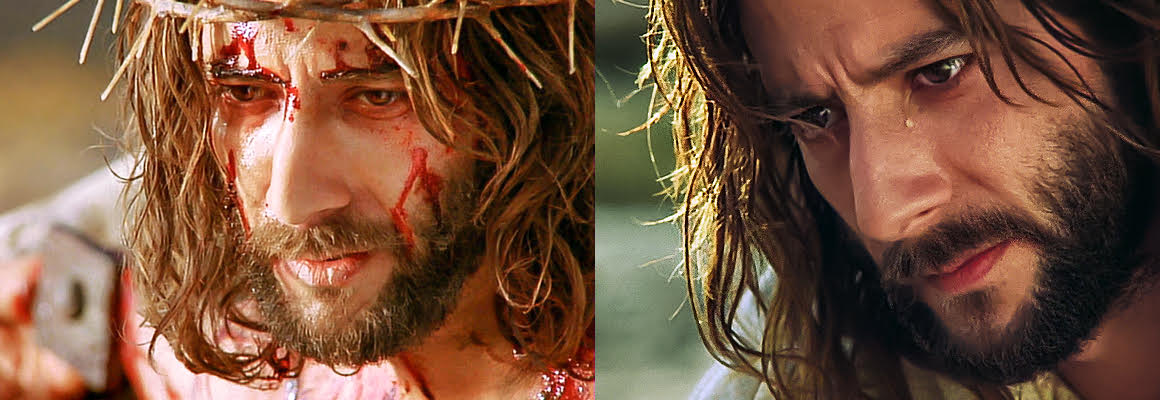
Cusick: Well, it’s a very heightened way of speaking. So for me that was a little bit tricky, trying to make it sound more conversational and naturalistic. But I know [scriptwriter] John Goldsmith from doing The Gospel of John. [Cusick played Jesus in the 2003 movie.] I think he knew how I would do it, which is maybe one of the reasons I got the job. [For more on the script, see Capturing Darwin’s Dilemma.]
MALIGNED AS THE ANTI-CHRIST
Q: Were you surprised by anything you learned about Darwin or his theory through the course of doing this project?
Cusick: Yes. You know, for all the creationists out there, Darwin’s just an atheist. But he was actually agnostic. There’s a passage in the film in which he says that he doesn’t know where the initial spark of life came from, you know? He thought that that spark of life came to Earth, and then from that one spark all these other things were created. And I think that’s a very honest and open view. I don’t see how anyone can say he’s anti-Bible, anti-God. He’s saying he just doesn’t know. He doesn’t know where the first spark came from.
“What a reasonable, kind, intelligent man this was—a genius who didn’t want to share [his theory] because of the repercussions it would have…”
The passage in the script, from Darwin’s own writing, goes: “I think there’s beauty—and grandeur—in a view of life having been originally breathed into perhaps a single form, and that from so simple a beginning, endless forms, most beautiful and wonderful, have been and are being evolved.”
I think that’s lovely. That is my favorite speech of the film. It seems like a very intelligent way of looking at how we arrived here. His view, to me, seems very plausible and very simple. Yet some people find him like the anti-Christ almost.
Q: Did learning about Darwin’s view of life give you a new perspective on the brouhaha over teaching evolution?
Cusick: It did. I have a lot of friends who are very religious and won’t see the film because of the subject, and I think they’re misinformed. You’ve really got to open your mind to it.
Q: Did seeing the world through Darwin’s eyes change your view of nature?
Cusick: I think it just reinforced it. It didn’t change it. I always was on the same page. But it just totally reinforced it and made me think what a reasonable, kind, intelligent man this was—a genius who didn’t want to share [his theory] because of the repercussions it would have, not only for him but for his wife and his family and his legacy. But he was sort of forced into it by Wallace’s discovery.
Q: Anything else that you would like to add?
Cusick: You know, for me, doing the film was educational and fun. And now, having seen it, it’s something I’m very proud of, and I hope it does well.
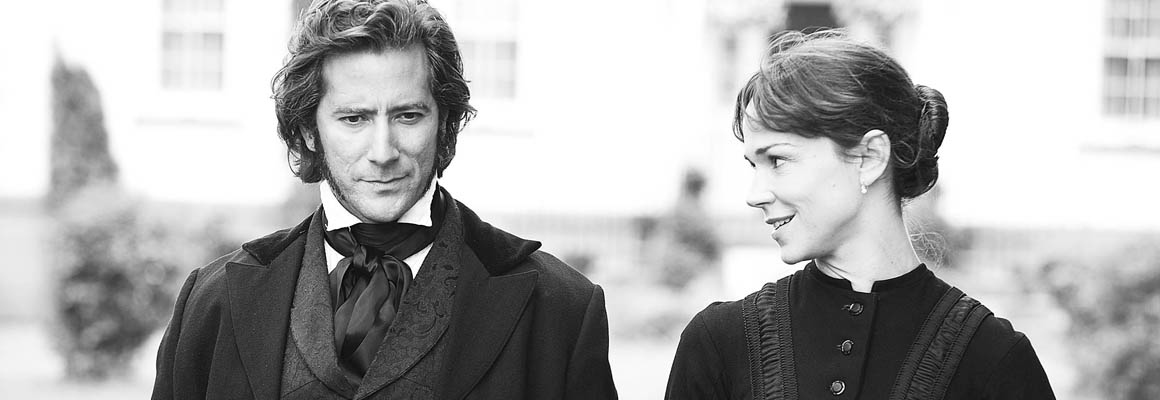
Happy Father’s Day to His Dadness! We love Ian as a real dad and an onscreen dad. Please enjoy this clip of Henry Ian Cusick playing a famous father, Charles Darwin, who is also considered to be the Father of Modern Biology. This is from Darwin’s Darkest Days, a Nova production that aired 6 October 2009. Ian is spectacular in this role, alongside Frances O’Connor (Emma Darwin), with Jacob Robertson (Frank), Simon Pattison (Horace) and Owen Pattison (Lenny) as the boys (seen here). Charles and Emma’s daughter, Annie, is played in the film by Emily Power.




 Henry Ian Cusick – Facebook
 Henry Ian Cusick – Vimeo
 Henry Ian Cusick – YouTube
 Henry Ian Cusick Official Site
 Henry Ian Cusick SoundCloud
 HenryIanCusickOfficial – IG
 Birthday Edition
 Caretaker – Audiobook
 1 Million Followers
 10.0 Earthquake
 After the Rain
 Awaken (9/Tenths)
 Carla
Carla Chimera
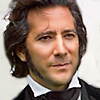 Darwin's Darkest Hour
 Dead Like Me:Life After Death
 dress (Directoral Debut)
 Fluxx
Fluxx Frank vs. God
 Fugitive from Asteron
 Hae Hawai'i
 Half Light
 Hitman
 Jamojaya
 Just Let Go
 Los Vampires
 Not Another Happy Ending
 Pali Road
 Perfect Romance
 Pulse
Pulse Rememory
 Salvador
 The Dinosaur Hunters
 The Girl on the Train
 The Gospel of John
 The Wind & The Reckoning
 Visible
 Theatre Gallery
 Adventure Inc.
 Casualty
 Happiness
 Midsomer Murders
 Murder Rooms
 Taggart
 The Book Group
 Twenty Twenty Six
 Two Thousand Acres of Sky
 Waking the Dead
 24 – Fox
 911: Lone Star
 Big Sky – ABC
 Body of Proof – ABC
 Butterfly – Prime Video
 CSI: Las Vegas – CBS
 Fringe – Fox
 Hawaii Five-O – CBS
 Inhumans – ABC
 Law and Order: SVU – NBC
 Lost – ABC
 MacGyver – CBS
 NCIS: Hawai'i – CBS
 Rush Hour – CBS
 Scandal – ABC
 The 100 – The CW
 The Mentalist – CBS
 The Passage – Fox
 The Wingfeather Saga – YT
 HTY – The HI Way Series
 JamBios
 Nestor Carbonell Central
 Petition – Carlton Cuse – Please Make A Show For Team Caliente (Henry Ian Cusick and Nestor Carbonell)
 Awaken Film
 CusickChick's Tumblr
 Henry Ian Cusick – IMDb
 Yatanis Tumblr
 CusickGallery Facebook
 CusickGallery Instagram
 CusickGallery Pinterest
 CusickGallery Tumblr
 CusickGallery Twitter
 CusickGallery YouTube
 Des & Pen Fanpop spot
 Desmond Hume Fanpop spot
 FanForum – Marcus Kane
 HIC Fanpop spot
 Kane & Abby Fanpop site
 Lost Screencaps site
 MacGyver Fanpop spot